Drain Field Repair and Replacement
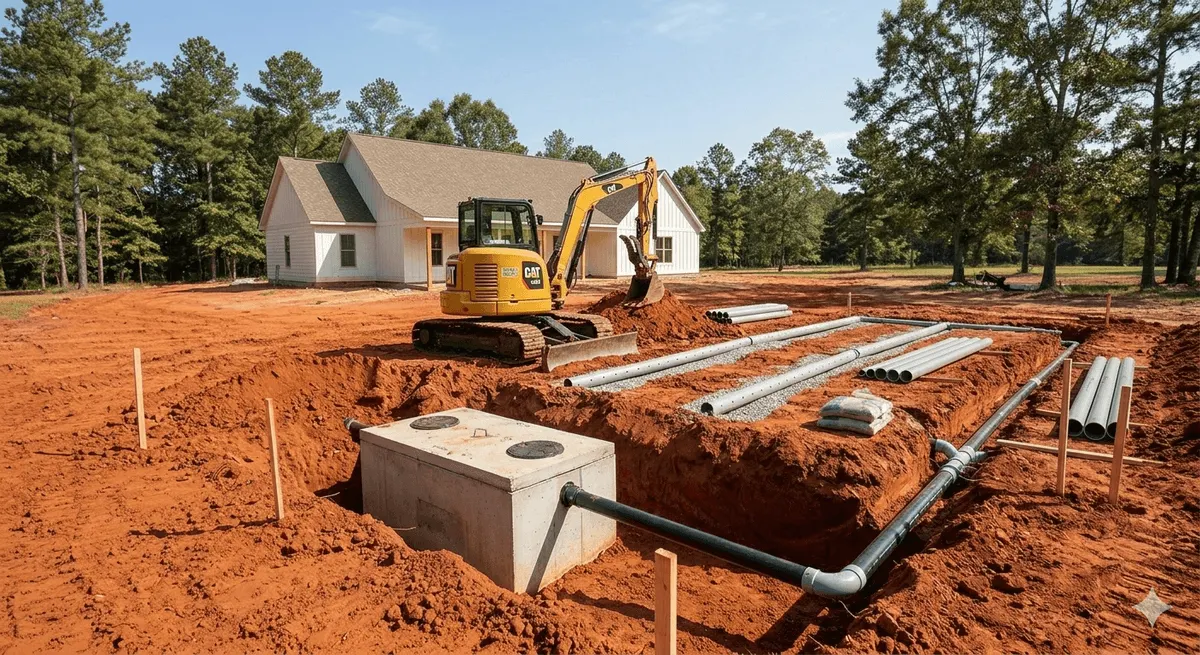
The drain field, also called leach field or absorption field, is the final treatment stage of your septic system. After wastewater passes through the septic tank, partially-treated effluent flows through perforated pipes buried in gravel-filled trenches. Surrounding soil provides final filtration before water returns to the groundwater. When drain fields fail, sewage surfaces in yards, backup occurs in homes, and the entire system stops functioning. Repair or replacement becomes necessary to restore safe wastewater treatment.
Georgia's red clay soil creates particular challenges for drain field longevity. Clay drains poorly compared to sandy soils, meaning drain fields work harder and may clog faster if not properly maintained. When biomat — a layer of accumulated organic solids — builds up in the soil pores, the clay can no longer absorb effluent. Water backs up, saturates the ground above the field, and eventually causes complete system failure. Early detection and professional assessment determine whether partial repair can save the field or full replacement is required.
Common Drain Field Problems We Address
- Biomat Buildup: The most common cause of drain field failure. Accumulated solids create an impermeable layer in the soil that prevents effluent absorption. Caused by infrequent tank pumping.
- Hydraulic Overload: Excessive water usage overwhelms the drain field's absorption capacity. Common in households with high water use or after heavy Georgia rainfall in clay soil areas.
- Pipe Damage: Broken or crushed distribution pipes prevent proper effluent distribution. Caused by heavy vehicles driving over the field, tree root intrusion, or ground shifting.
- Soil Saturation: High water table or poor drainage creates continuously saturated conditions. The drain field cannot absorb effluent when soil is already waterlogged.
- Compacted Soil: Vehicle traffic or construction equipment compacts soil over the drain field, reducing permeability and causing effluent to surface.
- System Age: Even well-maintained drain fields eventually reach end of life. In Toombs County clay soil, 20-25 years is typical maximum lifespan.
Signs Your Drain Field Is Failing
Drain field failure symptoms require immediate professional assessment. Warning signs include sewage surfacing in your yard over the drain field area, persistently wet or soggy ground above the drain field even during dry weather, strong sewage odors around the yard or drain field location, sewage backing up into the house through toilets or drains, and unusually lush green grass growing over the field year-round. Any of these indicators means the drain field is no longer absorbing effluent properly and system failure is imminent without intervention.
Repair vs. Replacement Decision
Not every drain field repair case requires complete replacement. If damage is localized to one section of pipe or one portion of the field, partial repair may restore function. We can replace damaged pipe sections, add new distribution lines to underutilized areas, or install effluent filters to protect the existing field from further solids. However, widespread biomat buildup or complete soil saturation typically requires full replacement — there's no way to restore soil permeability once it's thoroughly clogged.
Our assessment includes excavating sections of the field to examine pipes and soil conditions, testing soil absorption capacity, evaluating the extent of biomat formation, and determining remaining functional capacity. This provides definitive answers about whether repair is viable or replacement is necessary. We provide honest recommendations based on cost-effectiveness and longevity — sometimes spending $3,000 on partial repairs only delays a $12,000 replacement by one year.
Drain Field Replacement Process
Complete drain field replacement follows similar permitting requirements to new installations. We perform soil testing, design a new field layout based on current property conditions and household size, obtain permits, and schedule required inspections. The new drain field may be installed in a different location on your property if the original site's soil is exhausted. In some cases, we install the new field in a reserve area and abandon the old field rather than excavating it. Installation takes 3-5 days of physical work once permits are approved.
Preventing Drain Field Failure
Regular septic tank pumping is the single most important way to prevent drain field issues — pumping every 3 to 5 years removes solids before they reach the field. Additional protection includes minimizing water usage during wet weather, spreading laundry loads throughout the week rather than doing multiple loads in one day, never driving vehicles over the drain field area, keeping trees and large shrubs away from the field to prevent root intrusion, and avoiding use of garbage disposals which send excessive solids into the system.
How much does drain field repair cost?
Drain field repair ranges from $2,000 for partial restoration to $15,000 or more for full replacement. Sandy loam soil is more forgiving than red clay, but clay layers at depth can cause chronic drainage failure that requires permits and a new field design to correct.