Septic Line Repair and Replacement
Septic line damage causes sewage backups, wet spots in your yard, and unpleasant odors that indicate wastewater isn't reaching your tank properly. The line connecting your home to your septic tank — called the lateral line or sewage line — can break or collapse due to tree root intrusion, soil settling, heavy vehicle traffic, or simply aging pipes deteriorating over decades. When this critical pipe fails, immediate professional repair prevents sewage from backing up into your home and contaminating your property.
Most septic line problems worsen rapidly without intervention. A small crack allowing roots to enter quickly becomes a complete blockage requiring emergency excavation. Standing sewage in your yard poses serious health risks, especially for children and pets. Georgia environmental regulations require proper repair of failed sewage lines to prevent groundwater contamination. Our service quickly locates the damage, excavates only what's necessary, repairs or replaces the affected section, and restores your yard — getting your system functioning safely again with minimal property disruption.
Common Septic Line Problems We Repair
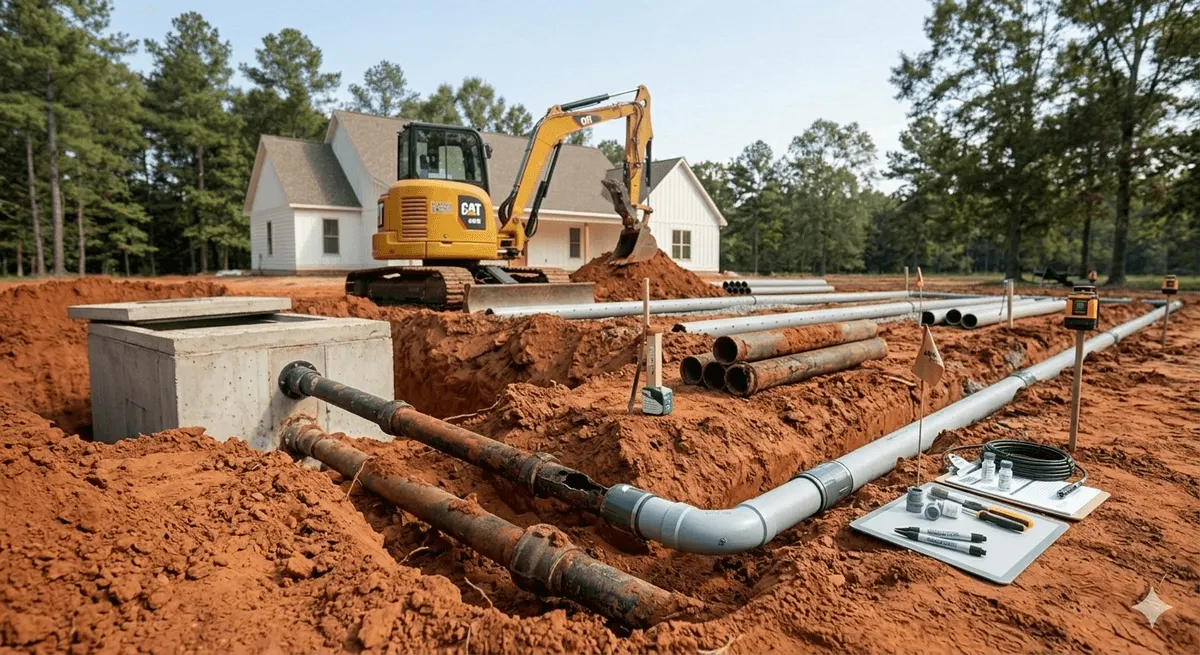
- Broken or Cracked Pipes: Tree roots, soil settling, or heavy traffic over the line can crack pipes, allowing sewage to leak into surrounding soil. You'll notice wet spots or sewage odors between your house and septic tank. We excavate the damaged section and install new pipe.
- Root Intrusion: Tree and shrub roots seek moisture and nutrients in septic lines. Roots enter through pipe joints and cracks, eventually filling the pipe and blocking flow. Georgia's red clay encourages aggressive root growth. We remove roots and replace damaged pipe sections with root-resistant materials.
- Collapsed Pipes: Older cast iron or clay pipes may collapse completely, creating a total blockage. Soil pressure, corrosion, or poor original installation causes collapse. Complete line replacement is often necessary when old pipes have deteriorated throughout their length.
- Separated or Offset Joints: Pipe sections can separate at joints due to ground movement or improper bedding. Sewage escapes at the separation point. We excavate the joint area and properly reconnect pipes with appropriate seals and support.
- Bellied or Sagging Pipes: Improperly supported pipes may sag, creating a low spot where solids accumulate and cause recurring backups. We excavate the sagging section, provide proper bedding, and reinstall pipe with correct slope for drainage.
- Corroded Metal Pipes: Old cast iron pipes corrode from inside out, eventually developing holes or complete failures. If your home has metal sewage pipes more than 40 years old, complete replacement with PVC prevents recurring problems.
- Pipe Penetrations: External objects like fence posts driven through buried pipes, or construction damage from digging equipment. We locate the penetration, excavate, and repair or replace the damaged section for your Toombs County property.
Septic Line Repair vs. Replacement
When Repair is Appropriate: If damage is isolated to one section, surrounding pipes are in good condition, and the overall line is relatively new (less than 25 years old), repair may be the cost-effective choice. We excavate only the damaged area, remove the bad section, and splice in new pipe with proper couplings. This approach works well for single breaks caused by specific events like construction damage or a fallen tree root impact point.
When Replacement is Better: If you have old clay or cast iron pipes showing multiple problems, extensive root intrusion throughout the line, or if video inspection reveals widespread deterioration, complete line replacement prevents recurring failures and emergency repairs. Modern Schedule 40 PVC pipe lasts 50+ years without corrosion or root intrusion problems. Replacement costs more initially but eliminates the pattern of repeated repairs every few years common with deteriorated old pipes in Vidalia properties.
Our Recommendation Process: We camera inspect your entire line when possible to assess overall condition, not just the obvious problem area. We show you video footage of your pipe interior and explain what we see. If the line has multiple vulnerable points or old deteriorating materials, we'll recommend replacement. If damage is truly isolated and remaining pipes are sound, repair makes sense. We provide cost estimates for both options.
Our Septic Line Repair Process
1. Emergency Response & Assessment: For emergency broken line calls, we respond quickly for sewage backup situations. We locate your line path using property records, probing, or electronic locating. We identify likely damage locations based on symptoms and visual yard inspection. If accessible, we camera inspect the line to precisely locate problems before excavating.
2. Excavation: We mark utility locations before digging. We excavate access holes at the damage point and at reference points to access the pipe. Our goal is minimal excavation—just enough to properly repair the damage. We carefully hand-dig near the pipe to avoid further damage. Excavated soil is set aside for backfill after repairs.
3. Repair or Replacement: For localized damage, we cut out the bad section and install new PVC pipe with proper couplings. For replacement, we remove the entire line from house to tank and install new Schedule 40 PVC with proper slope and bedding. All work meets Georgia plumbing code requirements. We test the repair before backfilling to ensure proper flow and no leaks.
4. Backfill & Restoration: We bed the pipe properly in clean fill material, compact backfill in lifts to prevent settling, and restore your yard surface as much as possible. You may need to seed or sod excavated areas. We haul away broken pipe and excess soil and provide site cleanup.
Trenchless Repair Options
Trenchless methods like pipe lining (inserting a new liner inside existing pipes) or pipe bursting (breaking the old pipe while pulling new pipe through) minimize excavation in some situations. However, these methods require specific conditions: sufficient pipe diameter, access points at both ends, relatively straight pipe runs, and pipes that haven't completely collapsed. Many residential septic lines in Vidalia don't meet these conditions due to small diameter (4-inch pipes are too small for many lining systems), sharp bends at the house connection, or complete line collapse.
Traditional excavation repair often provides better long-term results for septic lines because we can verify proper slope, ensure good pipe bedding, and confirm all connections are secure — critical factors for gravity-flow septic systems. Trenchless repairs cost more per foot than traditional methods and don't allow verification of slope and bedding quality. We evaluate whether trenchless methods are appropriate for your specific situation but recommend traditional excavation repair for most residential septic lines.
How much does septic line repair cost?
Septic line repair typically costs $1,500–$4,000 depending on pipe depth, length, and material. Root intrusion and soil movement in sandy loam ground are leading causes of line breaks — and Georgia Rule 511-3-1 requires permits for repairs that involve full system component replacement.